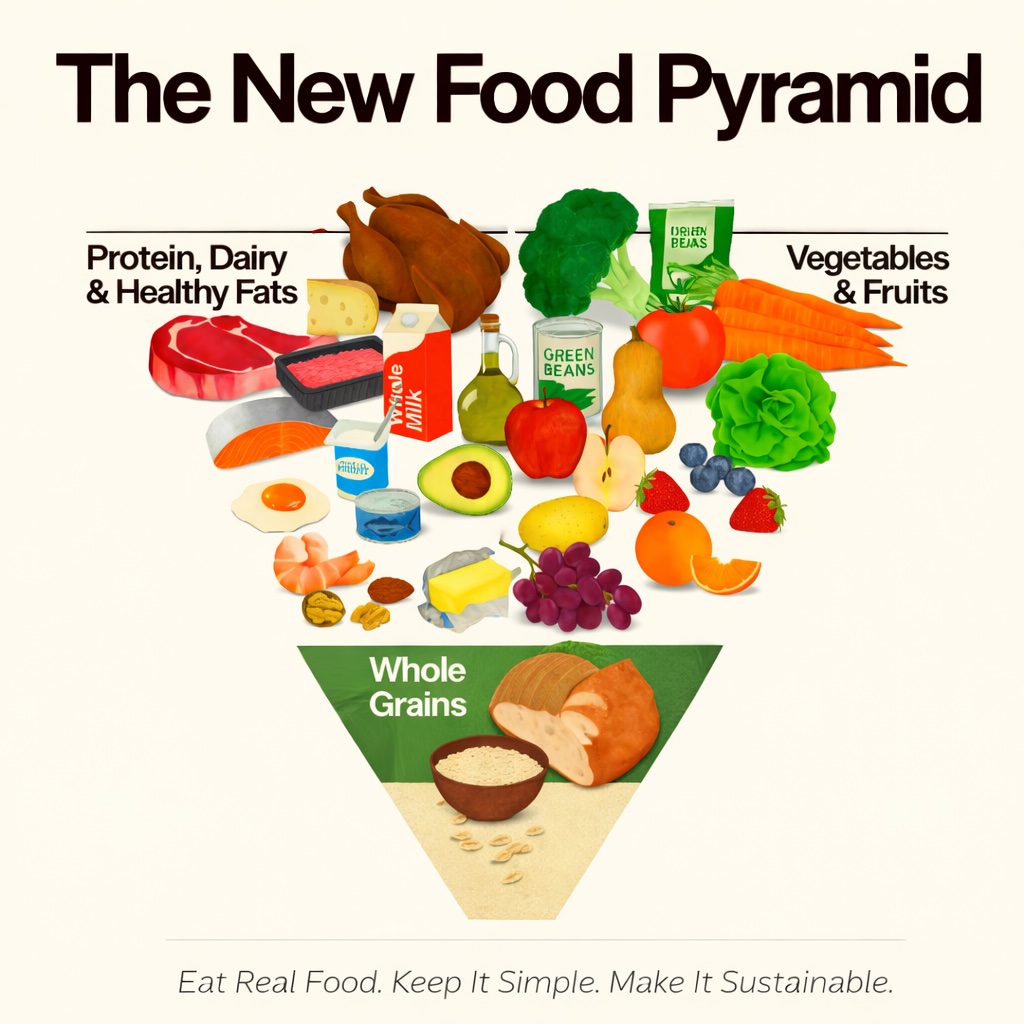
The newly released Dietary Guidelines for Americans are meant to place the focus back on real, whole foods and a common-sense approach to nutrition. Let’s take a look at what’s changed—and how you can make these guidelines work in real life.
What’s New in the Dietary Guidelines?
The U.S. Department of Agriculture (USDA) and the U.S. Department of Health and Human Services (HHS)recently published updated Dietary Guidelines for Americans. These guidelines are now represented by an inverted food pyramid, designed to emphasize whole, minimally processed foods while de-emphasizing highly processed options.
At its core, the message is simple:
“Eat real food.”
This shift more closely aligns with what many nutrition and health experts have been recommending for years.
You can view the full guidelines here:
cdn.realfood.gov/DGA.pdf
A Brief Look Back: The Original Food Pyramid
The original food pyramid, introduced in 1992, was heavily influenced by data at that time suggesting that saturated fat and cholesterol were major drivers of cardiovascular disease. As a result:
- Grains (including refined grains such as bread, cereal, rice, and pasta) were emphasized as the foundation of the diet
- Fats, oils, and meats were discouraged
- Low-fat and fat-free products were widely promoted
Unfortunately, reducing fat often meant replacing it with refined carbohydrates and added sugars. Naturally occurring fats were swapped for margarine and heavily processed seed oils. Highly processed foods—with long ingredient lists designed to mimic the taste and texture of fat—became staples.
The result?
These recommendations did not lead to better health outcomes and are now widely criticized for contributing to rising rates of obesity, metabolic syndrome, and chronic disease.
The New Pyramid: Turning Things Upside Down (In a Good Way)
The updated guidelines effectively flip the traditional pyramid on its head. An introductory message from Secretaries Kennedy and Rollins emphasizes returning to a diet centered on:
- Choosing whole, nutrient-dense foods
- Limiting packaged and ultra-processed products
- Prioritizing adequate protein intake
- Avoiding added sugars, refined starches, and chemical additives
- Eating the right amount for you
Where the Guidelines Are Still Debated
Like any broad set of recommendations, the new guidelines are not without criticism. Some concerns include:
- Promoting meats and full-fat dairy higher in the pyramid
- Including fats such as butter and beef tallow among healthy options
While excess saturated fat has been linked to heart disease, many experts argue that context matters—including food quality, amount of processing, and overall dietary patterns. The new guidelines continue to recommend keeping saturated fat intake to less than 10% of daily calories.
How to Make the New Guidelines Work for You
Core Principles
- Eat foods in their natural state as much as possible
- Avoid highly processed foods—especially packaged items with:
- More than 5 ingredients
- Ingredients you wouldn’t recognize or use at home
- Choose healthy fats from whole foods and keep saturated fat under 10% of daily calories
- Include protein at every meal
- Watch portions of calorie-dense foods such as meats, nuts, and fats
- Incorporate whole grains while limiting sugars and refined carbohydrates (breads, pasta, cereals)
- Limit snacking and mindless eating
Practical Strategies for Real Life
To Eat More Whole Foods
- Shop the perimeter of the grocery store
- Meal plan and prep for the week to reduce impulse eating and reliance on fast food
- Cook once, eat twice (use leftovers for lunches and snacks)
To Reduce Processed Foods
- Avoid or limit refined sugars and starches
- Minimize ultra-processed and packaged foods
- Be on alert when shopping the center aisles of the store (see my blog: Gems of the Center Aisles)
When Dining Out
- Choose baked or grilled over fried foods
- Add vegetables, whole grains, or fruit whenever possible
- Limit alcohol and sugary drinks; choose water, unsweetened tea, or coffee
The Bottom Line
While there may be differences of opinion on some of these recommendations, putting whole, nutrient-dense foods back at the center of our American diet is definitely a powerful place to start.
What steps can you take today to begin making better dietary choices?
Your body—and your future self—will thank you.
 Your Health in Focus